
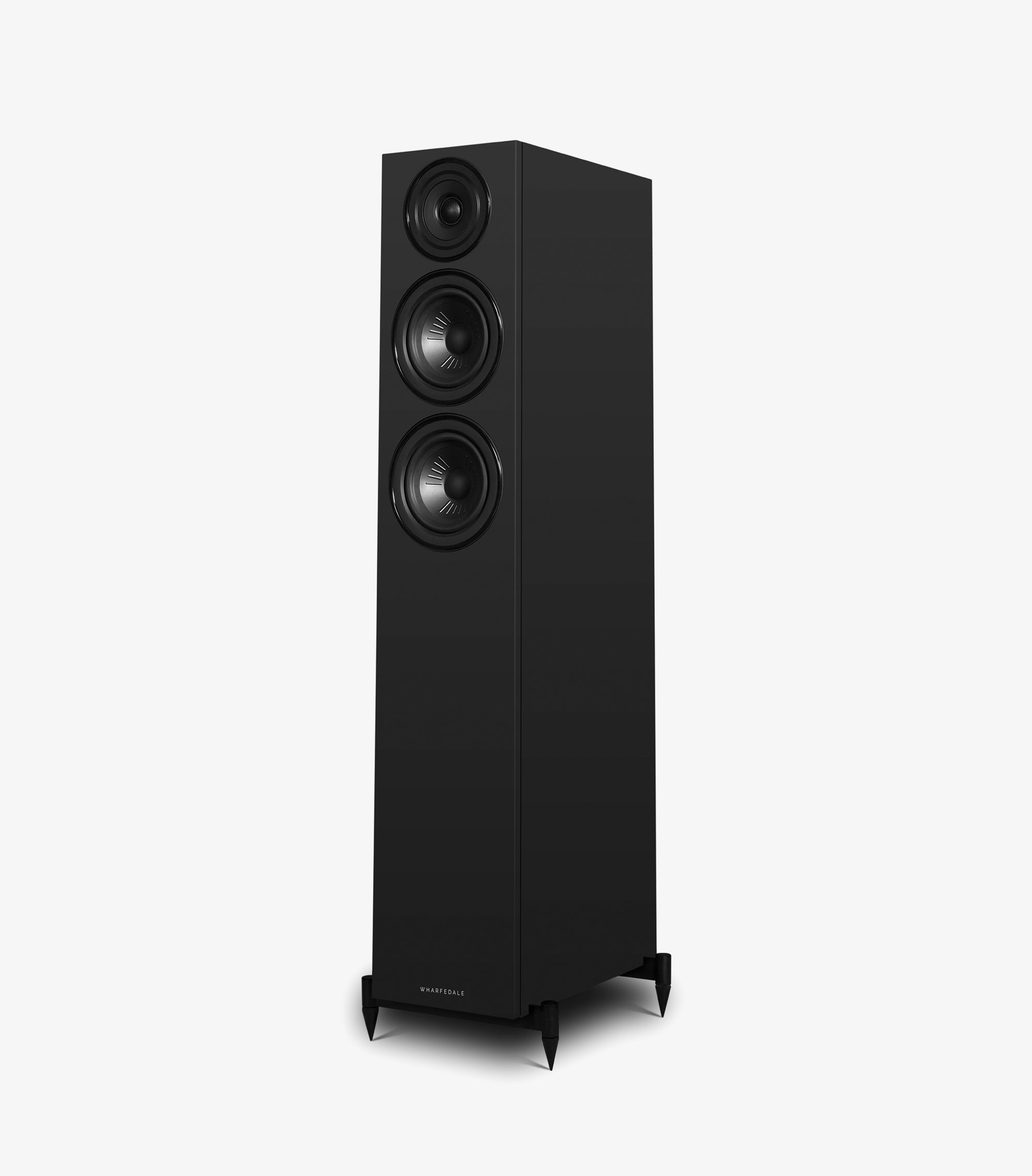
Wharfedale Diamond 12.3i Review: Budget Floorstanders That Punch Above Their Weight
Forty-three years. That is how long the Wharfedale Diamond has been a fixture of the affordable hi-fi world — and the latest iteration, the Diamond 12.3i, makes a compelling case that the lineage still has plenty to say. The “i” suffix signals a focused set of refinements rather than a complete redesign, but do not let that modest framing mislead you: the 12.3i sounds noticeably more accomplished than its predecessor, and at the same price.
What’s New in the Diamond 12i Series?
Wharfedale has been explicit about the 12i update: every model has been improved, and none of them cost a penny more than the 12-series did at launch. The full range spans three bookshelf models (12.0i, 12.1i, 12.2i), two floorstanders (12.3i and 12.4i), a centre channel (12.Ci), and Dolby Atmos add-on modules (12.3Di) — a complete system proposition at genuinely accessible prices.
Build and Driver Configuration
The 12.3i is a 2.5-way floorstanding speaker with three drivers. The tweeter is a 1-inch woven polyester dome treated with a damping compound and mounted in a shallow waveguide for improved directivity and reduced early reflections.
The two 130mm mid-bass drivers use Klarity cones — a blend of polypropylene and mica chosen for rigidity, low mass, and high resistance to acoustic loading. Each driver’s motor system features an aluminium shorting ring to control voice coil inductance, reducing distortion at high frequencies. The crossover follows a Linkwitz-Riley topology with air-core inductors.
The Upgraded Bass Reflex Port
The headline engineering change in the 12i update is a redesigned bass reflex port, developed under the direction of Wharfedale’s acoustic design director, Peter Comeau. The process took several months and involved laser interferometry, anechoic and in-room measurements, and computational fluid dynamics (CFD) modelling to optimise airflow and minimise port noise. Hundreds of hours of critical listening sessions followed.
The result is improved bass control and articulation, better midrange-to-bass integration, and a more stable stereo image regardless of listening position. The cabinet uses a multi-layer sandwich construction with computer-modelled internal bracing connecting opposing walls to reduce resonance.
Sound
The Diamond 12.3i reveals itself quickly. From the first bars of a bass-heavy track, these speakers demonstrate a low-end authority that feels disproportionate to their modest asking price — the bass is full and well-supported without becoming bloated or boomy.
What distinguishes the 12.3i from previous Diamond generations is textural refinement. Midrange detail is more clearly resolved, vocals are better centred, and the overall presentation has a natural ease that was less evident before. The treble is clean and extended without any brightness; the waveguide-loaded tweeter rewards good-quality sources.
The 12.3i handles genre diversity with confidence. Rock recordings benefit from the controlled bass register and the speaker’s willingness to reproduce scale; acoustic and jazz material reveals the improved midrange texture; electronic music exposes the rhythmic precision of the updated port. One practical note: these speakers respond well to neutral, well-matched amplification — heavy or dark amplifiers tend to blunt the top-end clarity.
Verdict
The Wharfedale Diamond 12.3i is an honest achievement in affordable hi-fi. The improvements over its predecessor are real and audible — particularly in the bass and midrange textures — without any price increase. For listeners entering the world of quality hi-fi, or those building a cost-effective system without compromising musical satisfaction, the 12.3i makes a strong and well-founded case.
| Specification | Detail |
|---|---|
| Type | 2.5-way floorstanding |
| Tweeter | 1″ woven polyester dome |
| Mid-bass drivers | 2× 130mm Klarity cone |
| Crossover | Linkwitz-Riley, air-core inductors |
| Finishes | Black, Stone Grey, Walnut |
| Price (UK) | ~£590/pair |


